

This post is also available in:
CYBER SECURITY
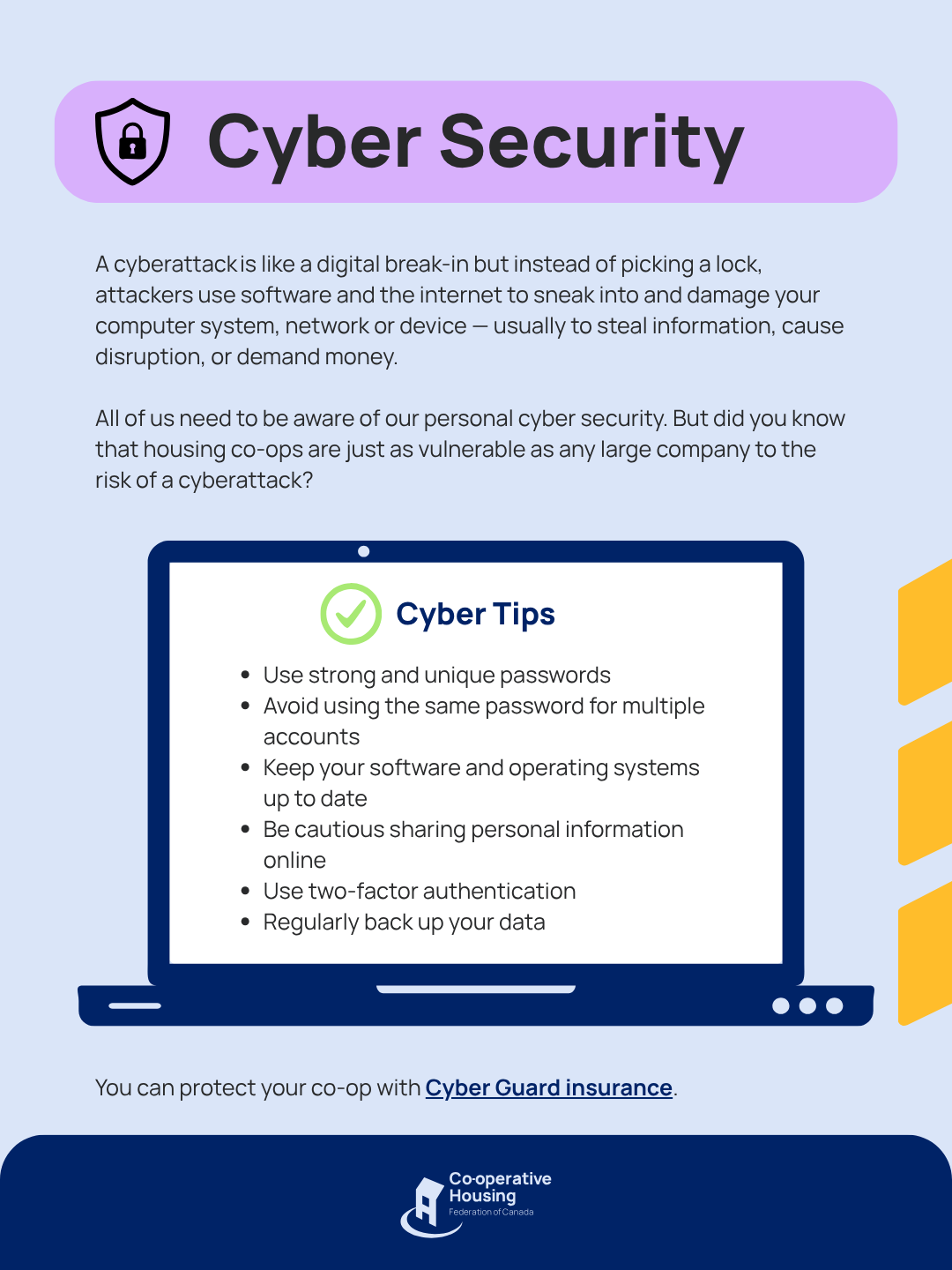 A cyberattack is like a digital break-in but instead of picking a lock, attackers use software and the internet to sneak into and damage your computer system, network or device—usually to steal information, cause disruption, or demand money.
All of us need to be aware of our personal cyber security. But did you know that housing co-ops are just as vulnerable as any large company to the risk of a cyberattack? Co-ops have sensitive information that can be exposed in a data breach. All it takes is one click on a malicious email for someone to gain access to private or sensitive information, leading to lost or misused data.
- Use strong and unique passwords
- Avoid using the same password for multiple accounts
- Keep your software and operating systems up to date
- Be cautious sharing personal information online
- Use two-factor authentication
- Regularly back up your data
You can protect your co-op with Cyber Guard insurance. Check it out and find even more tips to protect you and your co-op from cyberattacks.
WHY RAIN GUTTERS MATTER
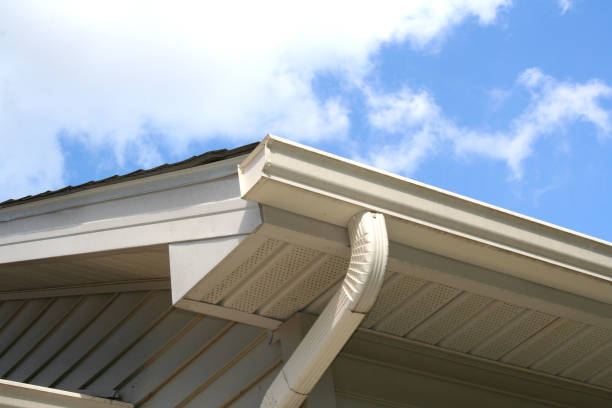 Hot tip: Spring is the perfect time to look up – and check your rain gutters!
During the winter season, ice and heavy snow may have damaged your co-op’s gutter system, even ripping it off completely from excessive weight.
The gutters up top are key to protecting your foundation below. When gutters fail to direct water away from the building, the foundation could crack. A cracked foundation can cause water damage to the inside of your home.
It can also lead to problems such as:
- Water pooling near entrances or walkways, increasing the risk of slips and falls
- Wood rot or deterioration in siding and rooflines
- Ice buildup in colder months, creating dangerous icicles or slick walkways below
Now is the time to give your gutters a little attention, and they will help keep your co-op dry and safe!
Staff and maintenance committee members: take a look and see that gutters are still fastened securely to the building and that the downspouts direct the water away from the foundation— but also away from walkways, or other commonly travelled areas in order to prevent slips and falls from ice buildup.
All co-op members: if you notice overflowing gutters, water pooling, or dripping where it shouldn’t be, contact your property manager to report the problem.
SMOKING AND PROPERTY RISK: WHAT CO-OP BOARDS SHOULD KNOW
 Smoking remains a leading cause of fires and property damage to members in the Commercial Insurance program. In co-ops where homes share walls or ventilation systems, the risks of damage from fire, smoke, or water from firefighting efforts are increased.
Property Damage Risks
- Fire hazards: Cigarettes, cigars, and smoking materials are a common source of accidental fires, especially when discarded improperly or used near bedding, furniture, or balconies.
- Smoke infiltration: Smoke can travel through walls, vents, and electrical chases, causing damage and odors in adjacent units and common areas.
- Long-term residue: Nicotine and tar can stain walls, ceilings, carpets, and fixtures, increasing turnover costs and reducing property value.
- Insurance exposure: Smoking-related fires can lead to higher insurance premiums.
Risk-Reduction Tips for Housing Co-ops
- Adopt clear smoking policies: Define where smoking is and isn’t permitted. Check out our model smoke-free by-law in our website resources
- Communicate consistently: Ensure residents understand the policy, the reasons behind it, and the consequences of violations
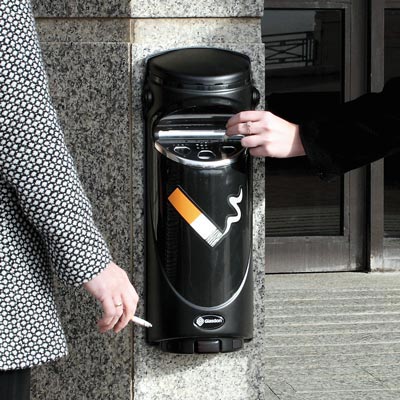
- Provide safe disposal options: Use fire-safe receptacles in approved outdoor smoking areas
- Document and enforce rules fairly: Consistent enforcement protects the co-op legally and reinforces shared responsibility
- Support cessation resources: Sharing information about quit-smoking programs can reduce risk and support resident well-being
By proactively addressing smoking-related risks, co-ops can help protect their members, preserve property, and reduce costly losses—while fostering a safer, more considerate community for everyone.